At BRIC, we live in a world of cameras, cutting rooms, late-night edits, and big creative swings. Film isn’t just something we watch – it’s what we study, support, produce, and champion. So this Black History Month, we’re proud to honor Black excellence in the medium that inspires so much of what we do.
We asked the creative minds at BRIC to share films of Black empowerment that they return to – the movies that challenged the form, shifted the culture, or simply told unforgettable tales. The result is a curated list of 100 favorites that celebrate visionary filmmaking and powerful storytelling.
Consider this your go-to watchlist for the weekend and beyond – and a reminder of the brilliance, range, and impact of Black cinema.
TOP 12 FILMS
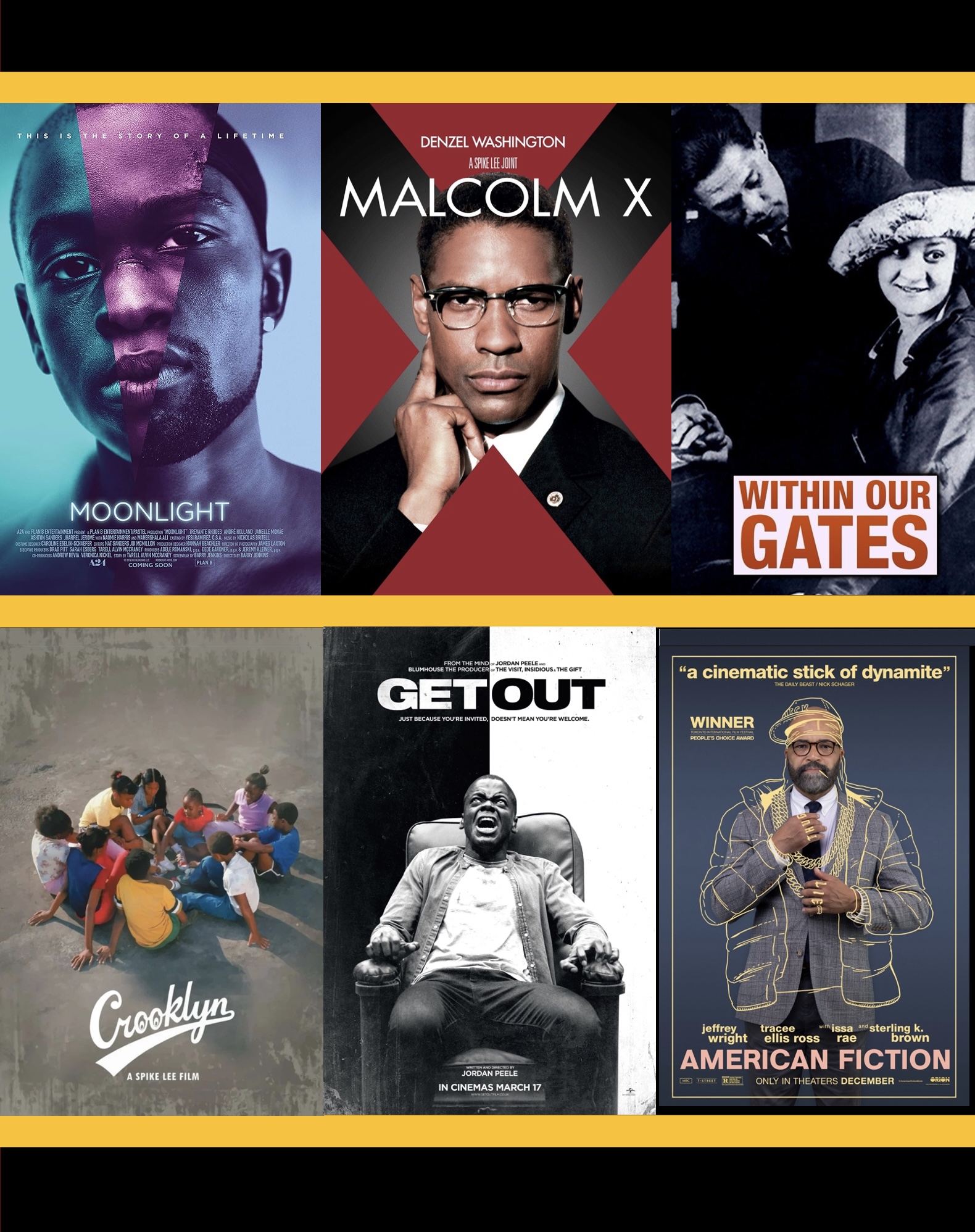
- Malcom X, d. Spike Lee, 1992
“Spike Lee’s epic drama spans the extraordinary life of activist Malcolm X, whose relentless advocacy for Black liberation made him a humanitarian icon.” – Netflix
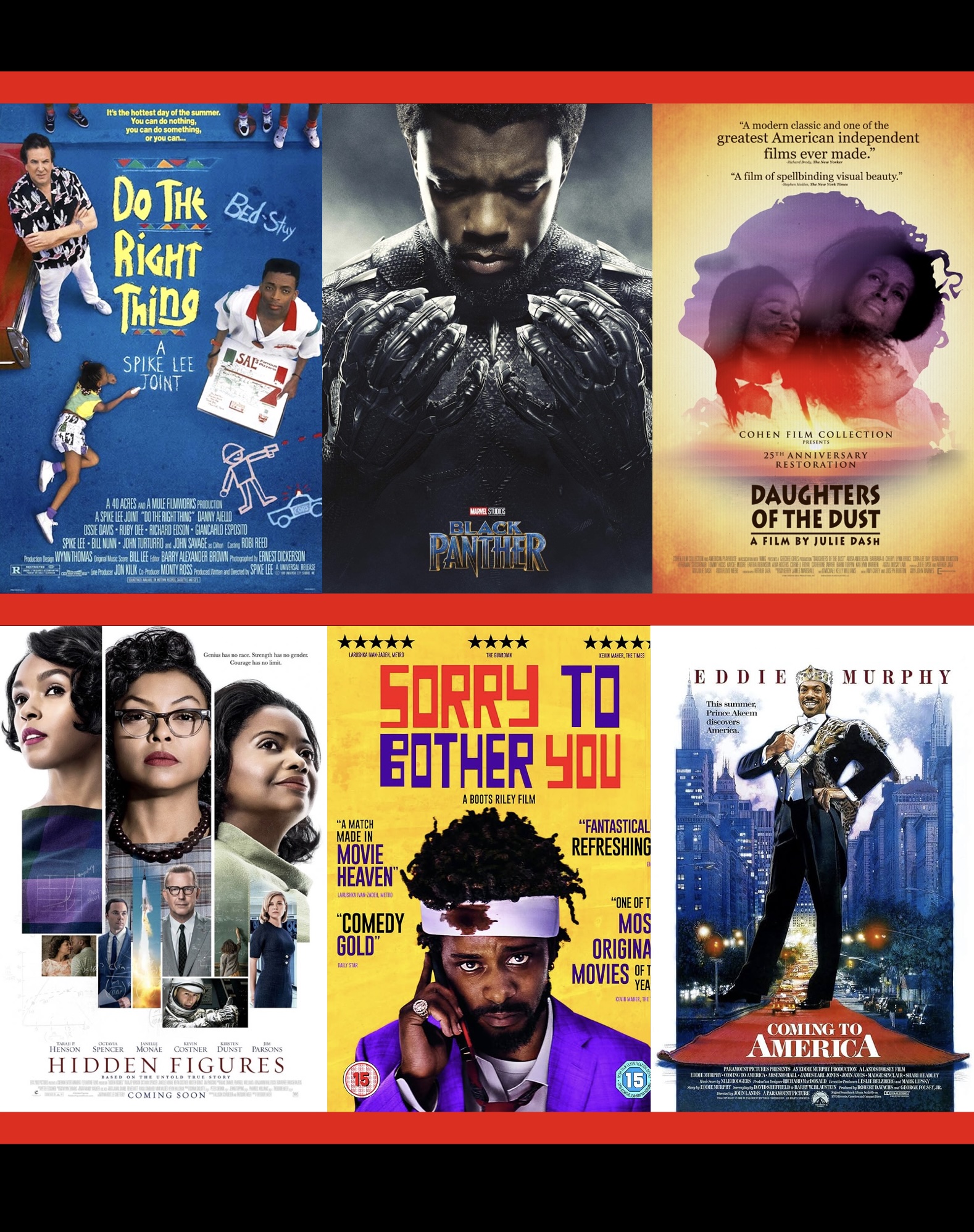
- Do the Right Thing, d. Spike Lee, 1989
“A landmark in American cinema, as politically and emotionally charged now as when it first hit the big screen.” – The Criterion Collection
- Get Out, d. Jordan Peele, 2017
“An exhilaratingly smart and scary freakout about a black man in a white nightmare, the laughs come easily and then go in for the kill.” – Manohla Dargis, The New York Times
- Crooklyn, d. Spike Lee, 1994
“A heartfelt film about childhood. Co-written by Lee alongside his brother, Cinqué Lee, and sister, Joie Lee, Crooklyn is clearly a snapshot inspired by their Brooklyn upbringing.”– Alex Papaioannou, InSession Film
- Black Panther, d. Ryan Coogler, 2018
“A jolt of a movie, ‘Black Panther’ creates wonder with great flair and feeling partly through something Hollywood rarely dreams of anymore: myth.” – Manohla Dargis, The New York Times
- Moonlight, d. Barry Jenkins, 2016
“A hard look at American reality and a poem written in light, music and vivid human faces. Like James Baldwin’s’ ‘Go Tell It on the Mountain’… ‘Moonlight’ dwells on the dignity, beauty and terrible vulnerability of black bodies.” – A.O. Scott, New York Times
- Hidden Figures, d. Theodore Melfi, 2016
“The untold story of [three] brilliant African-American women working at NASA and serving as the brains behind one of the greatest operations in history – the launch of astronaut John Glenn into orbit.” – Netflix
- Sorry to Bother You, d. Boots Riley, 2018
“A hilarious, moving, crazy, ambitious piece of satire… A cultural commentary on the working class, but also a dozen or so other things at the same time. It’s something you need to see to believe it exists.” – Brian Tallerico, RogerEbert.com
- Within Our Gates, d. Oscar Micheaux, 1920
“Working out of his independent company on a shoestring budget, Micheaux gave his characters a dignity and humanity rarely seen on screens. An unflinching look at the legacy of white supremacy in America.” – Kristin Hunt, JSTOR Daily
- Coming to America, d. John Landis, 1988
“Hoping to marry for love, a pampered African prince travels to Queens, New York, where he falls for the daughter of a local fast-food restaurant owner.” – Netflix
- Daughters of the Dust, d. Julie Dash, 1991
“Julie Dash’s visually arresting ‘Daughters of the Dust’… is like no other film. It belongs to black women, it is rich with our faces, voices, and movement. This is a story we will tell our children again and again.” – Patricia Smith, Boston Globe
- American Fiction, d. Cord Jefferson, 2023
“A scathing satire, a family drama, and an absolute triumph: writer-director Cord Jefferson deconstructs how white guilt stifles black creatives and skewers the publishing industry while giving Jeffrey Wright the role of a lifetime.” – David Fear, Rolling Stone
24 DOCUMENTARIES
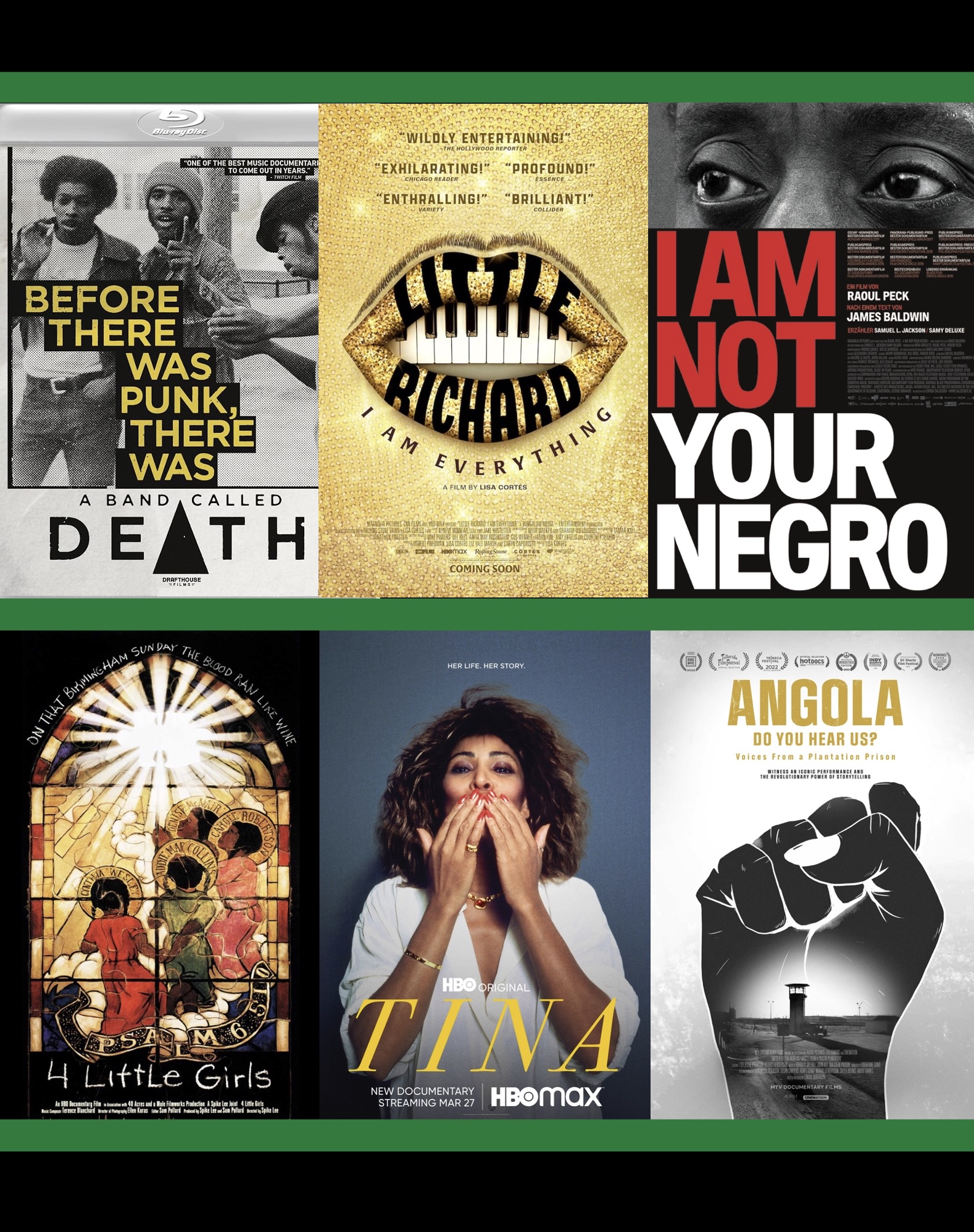
- I Am Not Your Negro, d. Raoul Peck, 2016
“An extraordinary visual essay, distilling centuries of black history into 95 minutes, while serving as a biography of [James] Baldwin. Footage of 1960s civil rights protests lead into footage from Ferguson. The through-line is easily drawn.” – Olly Richards, NME
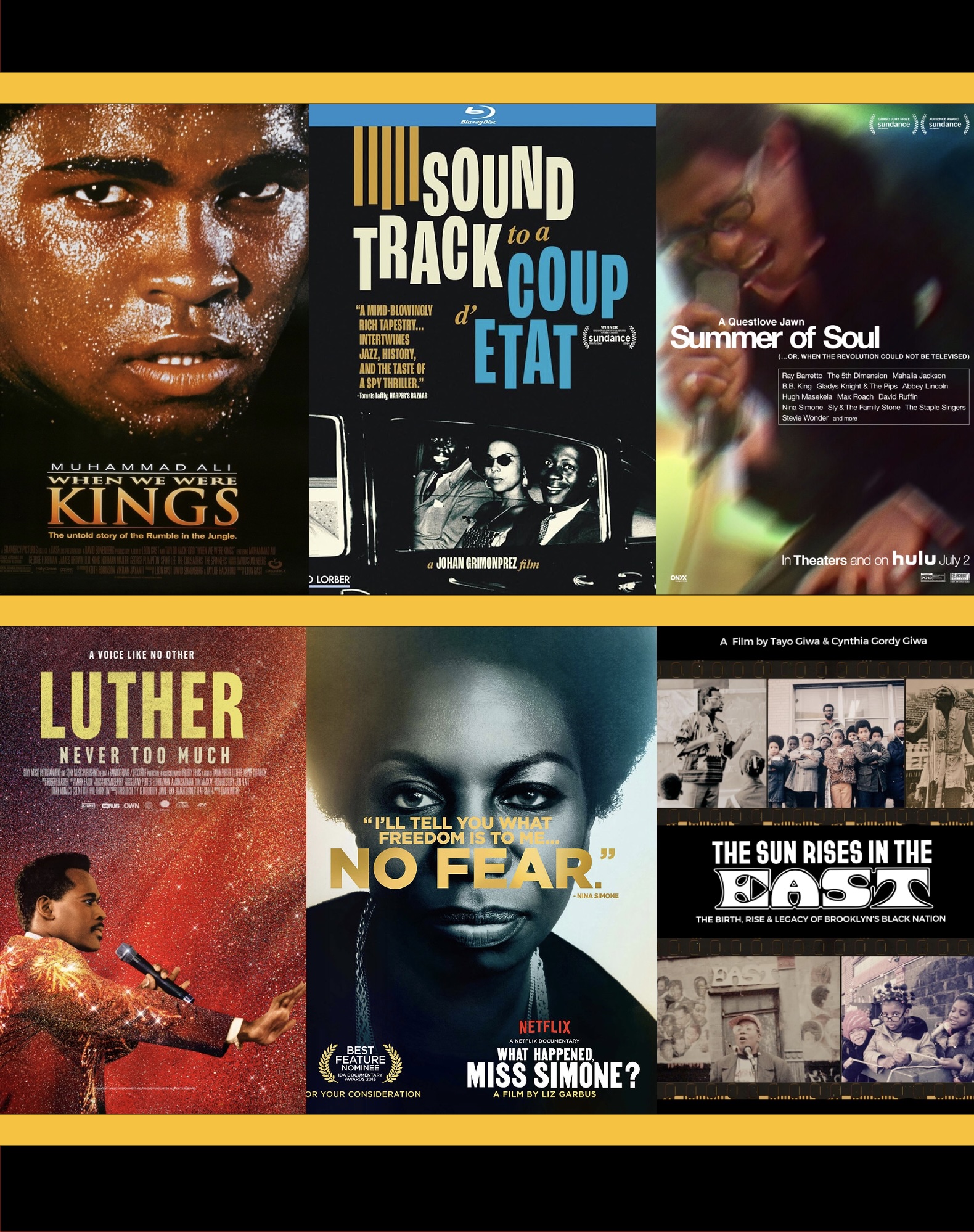
- Summer of Soul (…Or, When the Revolution Could Not Be Televised), d. Questlove, 2021
“This Sundance award-winner is an absolute joy, uncovering a treasure trove of pulse-racing, heart-stopping live music footage. Intertwines music and politics in one of the best concert movies of all time.” – Mark Kermode, The Guardian
- Wattstax, d. Mel Stuart, 1973
“A mere concert flick it’s not. ‘Wattstax’ not only documents the soul-titan concert held at L.A. Coliseum seven years after Watts burned, but illuminates the rue and kinesis of a city in full Black Power flower.” – Laura Sinagra, Village Voice
- 4 Little Girls, d. Spike Lee, 1997
- 20 Feet from Stardom, d. Morgan Neville, 2013
- A Band Called Death, d. Mark Covino & Jeff Howlett, 2012
- A Choice of Weapons: Inspired by Gordon Parks, d. John Maggio, 2021
- Angola Do You Hear Us? Voices from a Plantation Prison, d. Cinque Northern, 2022
- Betty: They Say I’m Different, d. Philip Cox, 2017
- John Henrik Clarke: A Great And Mighty Walk, d. St. Clair Bourne, 1996
- Little Richard: I Am Everything, d. Lisa Cortes, 2023
- Luther: Never Too Much, d. Dawn Porter, 2024
- Miss Sharon Jones!, d. Barbara Kopple, 2015
- Muhammad Ali: When We Were Kings, d. Leon Gast, 1996
- O.J. Made in America, d. Ezra Edelman, 2016
- Paris is Burning, d. Jennie Livingston, 1990
- Soundtrack to a Coup d’Etat, d. Johan Grimonprez, 2024
- The Sun Rises in the East, d. Tayo Giwa, 2022
- Teddy Pendergrass: If You Don’t Know Me, d. Olivia Lichtenstein, 2018
- Time, d. Garrett Bradley, 2020
- Tina, d. Daniel Lindsay & T.J. Martin
- Tongues Untied, d. Marlon Riggs, 1989
- Toni Morrison: The Pieces I Am, d. Timothy Greenfield-Sanders, 2019
- What Happened, Miss Simone?, d. Liz Garbus, 2015
64 FEATURE FILMS
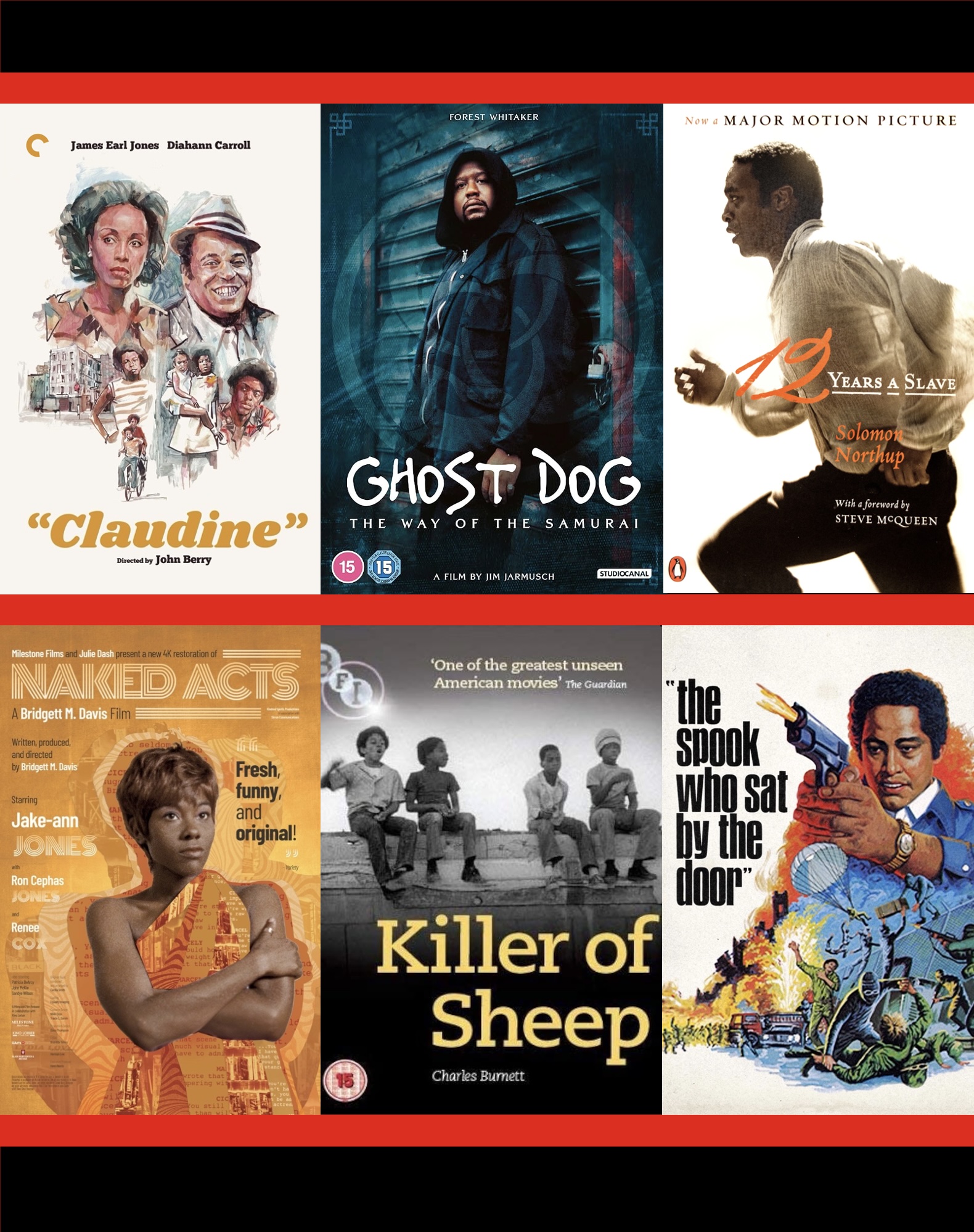
- 12 Years a Slave, d. Steve McQueen, 2013
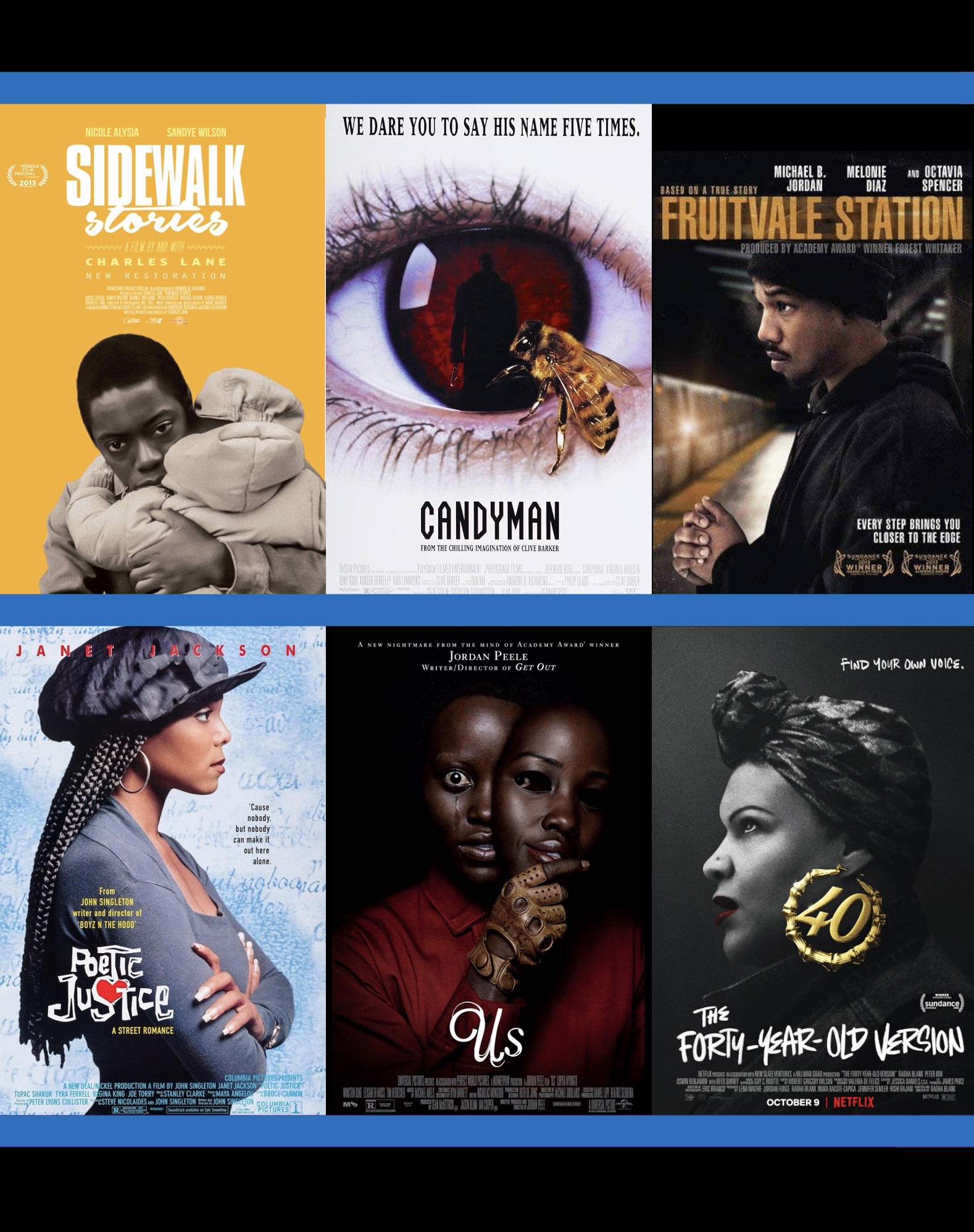
- The 40-Year-Old-Version, 2020, Director: Rahda Blank, 2020
- Afro Samurai: Resurrection, d. Fuminori Kizaki, 2009
- Ali, d. Michael Mann, 2001
- Antwone Fisher, d. Denzel Washington, 2002
- Attack the Block – d. Joe Cornish, 2011
- Baadasssss! d. Mario Van Peebles, 2003
- Bamboozled, d. Spike Lee, 2000
- Basquiat, d. Julian Schnabel, 1996
- The Best Man, d. Malcolm D. Lee, 1999
- Black Dynamite, d. Scott Sanders, 2009
- Blade, d. Stephen Norrington, 1998
- Boomerang, d. Reginald Hudlin, 1992
- Candyman, d. Bernard Rose, 1992
- Chi-Raq, d. Spike Lee, 2015
- Claudine, d. John Berry, 1974
- Compensation, d. Zeinabu irene Davis, 1999
- Cooley High, d. Michael Schultz, 1975
- Cotton Comes to Harlem, d. Ossie Davis, 1970
- Dancehall Queen, d. Rick Elgood & Don Letts, 1997
- Dope, d. Rick Famuyiwa, 2015
- Eve’s Bayou, d. Kasi Lemmons, 1997
- The Five Heartbeats, d. Robert Townsend, 1991
- Fruitvale Station, d. Ryan Coogler, 2013
- Ghost Dog: The Way of the Samurai, d. Jim Jarmusch, 1999
- He Got Game, d. Spike Lee, 1996
- His House, d. Remi Weekes, 2020
- House Party, d. Reginald Hudlin, 1990
- If Beale Street Could Talk, d. Barry Jenkins, 2018
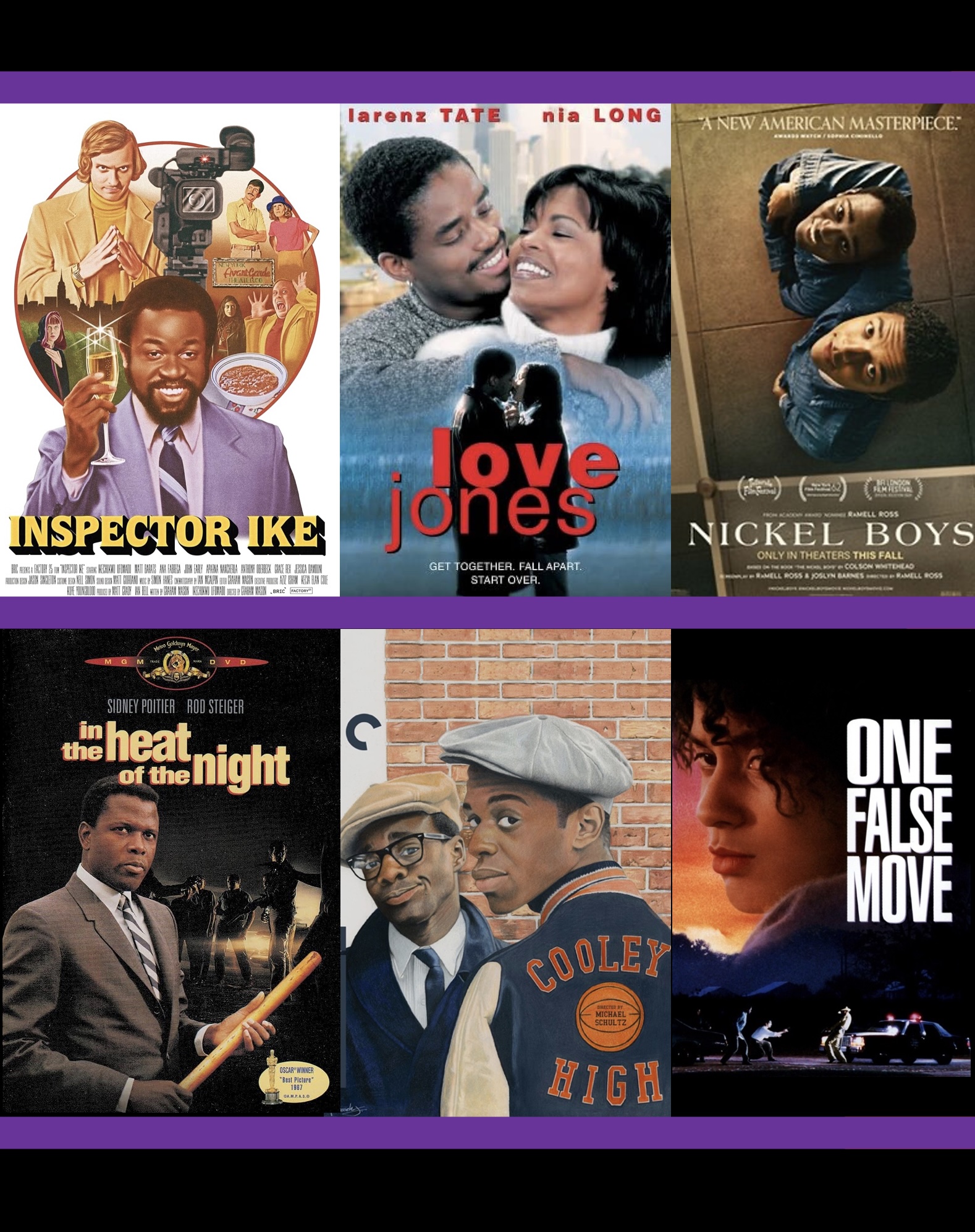
- In the Heat of the Night, d. Norman Jewison, 1967
- Inside Man, d. Spike Lee, 2006
- Inspector Ike, d. Graham Mason, 2020
- Just Another Girl on the IRT, d. Leslie Harris, 1992
- Killer of Sheep, d. Charles Burnett, 1978
- La Vita Davanti a Se, d. Edoardo Ponti, 2020
- Lady Sings The Blues, d. Sidney J. Furie, 1972
- Losing Ground, d. Kathleen Collins, 1982
- Love & Basketball, d. Gina Prince-Bythewood, 2000
- Love Jones, d. Theodore Witcher, 1997
- Mississippi Masala, d. Mira Nair, 1991
- Naked Acts, d. Bridgett M. Davis, 1996
- Neptune Frost, d. Anisia Uzeyman & Saul Williams, 2021
- Nickel Boys, d. RaMell Ross, 2024
- One False Move, d. Carl Franklin, 1992
- Paid in Full, d. Charles Stone III, 2002
- Pariah, d. Diandrea Rees, 2011
- Poetic Justice, d. John Singleton, 1993
- Porgy and Bess, d. Otto Preminger, 1959
- The Pursuit of Happyness, d. Gabriele Muccino, 2006
- Remember the Titans, d. Boaz Yakin
- Rye Lane, d. Raine Allen-Miller, 2023
- She’s Gotta Have It, d. Spike Lee, 1986
- Sheba, Baby, d. William Girdler, 1975
- Sidewalk Stories, d. Charles Lane, 1989
- Sinners, d. Ryan Coogler, 2025
- Soul Food, d. George Tillman, Jr., 1997
- Sparkle, d. Sam O’Steen, 1976
- Spider-Man: Into the Spider-Verse. d. Bob Persichetti, Peter Ramsey & Rodney Rothman
- The Spook Who Sat By the Door, d. Ivan Dixon, 1973
- Tangerine, d. Sean Baker, 2015
- To Sleep With Anger, d. Charles Burnett, 1990
- Us, d. Jordan Peele, 2019
- Watermelon Woman, d. Cheryl Dunye, 1996
- The Wood, d. Rick Famuyiwa, 1999
- Yardie, d. Idris Elba, 2018